
Metta in the Age of Vitriol

Image result for Metta Loving Kindness

Thankfully, we are in an age of many things – both good and bad, not just “vitriol”. However, besides a good word to throw into a title to get some attention, it is also is what I wanted to blog about.

Having come out of the recent Sangha in which David Clark was able to, nicely and in fairly short order, walk the group through a definition, discussion and practice of Metta, or loving kindness, it seemed all too timely to discuss this practice in the context of the 24 hour vortex of news and discourse that has become our 2016 election cycle.

As referenced during our session on Monday (October 17, 2016), the practice of Metta extends from those we care about to ourselves to those we may have only a passing knowledge of to those we have difficulty with and ultimately to all sentient beings.

I’m good up to the part where we get to people we have difficulty with. I have read a lot about this topic, largely also from Sharon Salzberg, who was the author highlighted during this discussion.

To recap, when it comes to practicing Metta with more difficult people in our lives (friends, family members, co-workers, etc.), it is recommended to first start with those with which we may have more tolerable frustrations as opposed to those with whom we may be involved in much more difficult situations or grievances. (As an example, Donald Trump or Hillary Clinton might first try to send loving kindness first to one of their campaign workers with whom they didn’t get a memo in time and wait a bit to try it on each other – hypothetically speaking, of course.)

This is a real struggle for me and here is why: one of the prevailing ideas around meditation is that we don’t try to hide away the feelings we have, be they pleasurable or difficult. To acknowledge more difficult feelings, such as anger, without attaching, particularly when in the midst of a very upsetting situation, is a huge step, I think. The idea of then ultimately getting to a place where I can also send loving kindness to that same person becomes a stretch.

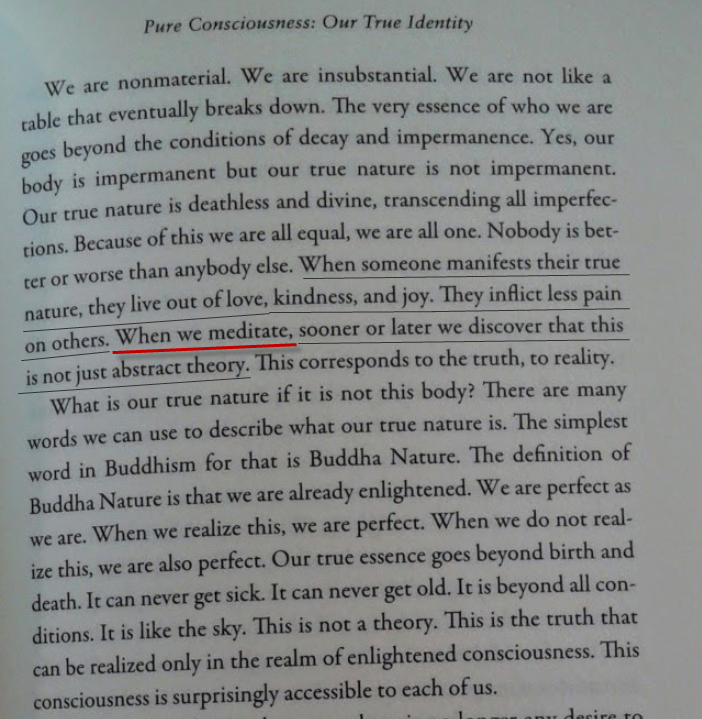
Thinking about this and wanting to identify with my more “Buddha” nature can cause conflict. After all, shouldn’t one understand that we are responsible for our own interpretation of so called “difficult” people or encounters rather than identify with the feelings that so easily emanate from them?

Well, yes, in theory. And so it was that in listening to the discussion, I really started to question why this seems to be such a difficult proposition. For me, the act of simply responding versus reacting and not wishing harm is a step toward wishing loving kindness for one’s “enemy” if not an act in itself. It is human nature, often deemed as ‘fight or flight’ to either “be killed or kill that which kills you (or is perceived to). Any step away from this more immediate reaction, at least for me, is a testament to a growing practice of both meditation and mindfulness.

Perhaps when it comes to vitriol, difficult people or situations and dealing with hard emotions, this is the work we can do. It simply may not be realistic to practice loving kindness with some people the same way we do with others….and that is ok. As long as directionally we are working toward it, that may be all we can expect and that may be enough at the moment.
Posted in Home | Tagged , , , , | Comments Off on Metta in the Age of Vitriol

Discussions Theme for Oct and Nov 2016

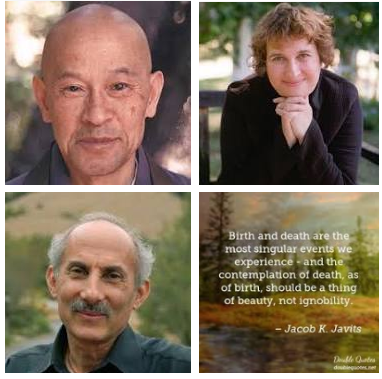
tachersOctober 2016 we will be Learning about Contemporary Buddhist Teachers in the United States. In addition to learning about their background, we will discuss one or two of their main teachings.
 
October 10: Suzuki Roshi (19041971) – a Soto Zen monk who helped popularize Zen Buddhism in the United States, founder of the San Francisco Zen Center
 
October 17:  Sharon Salzberg – an active Buddhist teacher and writer who co-founded the Insight Meditation Society in Barre, Massachusetts in 1974
 
October 24:  Jack Kornfield, an active Buddhist teacher and clinical psychologist who co-founded the Insight Meditation Society in Massachusetts and Spirit Rock Center in California
 
October 31: Buddhist Death Contemplation

Posted in Home | Tagged , | Comments Off on Discussions Theme for Oct and Nov 2016

November 2016 Lama Gursam Dharma Talk and day long Retreat

The Audio of the dharma talk is now available

Lama Gursam November 5th     
Lama Gursam November 4th     

Continue reading

Posted in Home | Tagged , , | Comments Off on November 2016 Lama Gursam Dharma Talk and day long Retreat

Practicing Meditation with Anam Thubten – a retreat

Labor day weekend in 2016 I had the pleasure to attend a retreat with Anam Thubten organized by the Princeton Buddhist Meditation Group.

This was not a typical meditation retreat, and after settling in on the first evening Anam Thubten encouraged us to all get to know each other before we embarked on 4 days of deepening our practice in the orientation.  This retreat had about 50 people and it felt good to meet most of them and chat before practicing together.

The retreat consisted of 6am wake up and periods of meditation and dharma talks by both Anam Thubten and Ani Trime, an American-born Buddhist nun and a practitioner of Tibetan Buddhism for nearly 35 years.  We were well fed and there were plenty of snacks and beverages between sittings for everyone who wanted to recharge. The day ended with a closing service and a 10pm curfew.

The first sitting meditation of the day consisted of beautiful chanting of the three refuges and a guided meditation. We were instructed on the importance of posture which was followed by a concentration meditation on the breath and a suggestion to drop the concentration on the breath after settling and just to be in awareness. The meditations lasted 45 minutes followed by a talk and another 45 minute session.

Anam spoke from the heart and with full awareness during the dharma talk portion of the day. Something about him just exuded a serene calm-abiding nature. I found his teachings meaningful and they cut through to the heart of what the Buddha taught. Here are some of my takeaways from this experience:

  • Be grateful for this life. Today is a gift of life and an opportunity to be awake
  • Ask yourself “What if I die tomorrow?” – how do I want to spend today, what would I do and who would I reach out to? Meditate of that question.
  • Say to yourself – Today I am grateful for my life, my parents, their parents, all my ancestors , and all the people who showed them love and kindness in their life.  I am grateful for myself and my practice.
  • I am grateful for my children, for their love, for their mother giving her kindness and taking very good care of them.
no-self-no-problem

The retreat was a very good experience for me – practicing dilgently I slowly saw my mind become calm and I became more receptive to experiencing the way things really are instead of fighting with reality.

Having both meditation cushions and chair was also helpful so that I could switch between them and make my body more comfortable.

Posted in Home | Tagged , , | Comments Off on Practicing Meditation with Anam Thubten – a retreat

Juno, Buddha and Identity

by Marc Kaye

Image result for Ellen Page Juno Quotes.I don’t know what type of girl I amOne of my favorite movies is Juno¸ where Ellen Page plays a high school girl who suddenly finds herself pregnant and takes it upon herself to not only navigate this new reality but also find a couple to adopt her baby. Upon revealing her pregnancy to her parents, her dad says “I thought you were the kind of girl who knew when to say when” to which she replies “I don’t know what type of girl I am.”
This line, more than any other, struck me because how many times have we, ourselves, wondered why we made a certain choice, acted in a certain way or otherwise seemed to inhabit the mind of someone foreign to ourselves?

Maybe what Juno was facing, in her own way, was the prospect of balancing her “Buddha self with her Social Security number”, as Buddhist Monk, teacher and author Jack Kornfield often describes. Basically, he is referring to the balance we face living in this world but not necessarily being of this world whereby we can allow for both our true nature and the identities that represent us (partner, brother, employee, friend, parent, etc.).

Throughout the course of the film, Juno does find out what type of person she is and it is multi-faceted. It is not one thing. This is the point.

For me, it wasn’t until I started a practice of meditation and learning that I even understood that it could be “normal”, (whatever that loaded word means), let alone acceptable, to “be” many different manifestations of who we are. This has always been a struggle for me. My truest self is a daily mish-mosh of responsibility, creativity, love, frustration, acceptance and struggle. I, like many others, I suspect, am learning to accept feelings but not attach to them. This is what Juno does in the movie. She gets to a point where, despite her dry sense of wit and humor, she has no choice but to face feelings that culminate around being pregnant, trying to stay “cool”, dealing with high-school and a couple she barely knows about to adopt her child. It is only when she accepts these that she has the clear presence of mind to go where the path is leading her, not where she thought she was headed, that she is able to move forward. Had she stayed attached, the outcome would had been very different.

In that pivotal moment, Juno found a way to balance her true nature and, (in her case), let’s call it her high school ID.

May we all continue to do the same with increasing ease.

Marc

Posted in Home | Tagged , , , , , | Leave a comment

Green Tara Service for Gil Howard

Dear Sangha Friends,

It is with a heavy heart that we announce that our beloved Gil Howard has passed away.

Gil was a long-time member and a foundational support of the Buddhist Sangha of Bucks County. He served as our President, our Vice President, and as a Board member for years.

On Monday, Oct 3 we will have a special ceremony in honor and remembrance of Gil, including a Green Tara visualization. Please join us Monday night in support of both our grief and our gratitude for having known Gil, and for all he’s done for us over the years. Thank you very much.

The Sangha meets at 65 N. Main Street, Yardley, PA ( Yardley Friends Meeting )

Also, on Wednesday, Oct 5, a Memorial Service for Gil Howard will be held at the Yardley Friends Meeting from 11 Am to 4 PM. All are welcome to attend this service to share your memories of Gil.

Who is Tara? This is from Wikipedia: Tara is a tantric meditation deity whose practice is used by practitioners of the Tibetan branch of Vajrayana Buddhism to develop certain inner qualities and understand outer, inner and secret teachings about compassion and emptiness. TaLama Gursamra is actually the generic name for a set of Buddhas or bodhisattvas of similar aspect. These may more properly be understood as different aspects of the same quality, as bodhisattvas are often considered metaphors for Buddhist virtues.

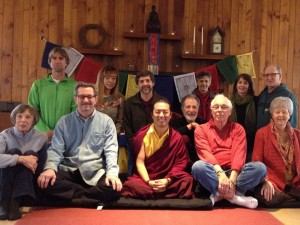
Here is Lama Gursam on Green Tara.

Posted in Home | Tagged | Comments Off on Green Tara Service for Gil Howard

Dr. Rebecca Li Dharma talk – importance of practice – September 19, 2016

We are pleased to announce that Dr. Rebecca Li, who studies and teaches in the Chan tradition, visited us in Yardley on Monday, September 19th.

The following is the Audio of the Dharma talk on this day

Rebecca Li      

Chan started in China in the 6th century CE, and spread south to Vietnam, and to Korea, and reached Japan in the 13th century CE, where it became known as Zen.  Read her article in Lions Roar Magazine

Rebecca taught about the importance of practice and about the Chan tradition. She also lead us in a guided meditation in the Chan style, and answered our questions.

About Rebecca Li, Phd

Rebecca began practicing in 1995, and attended her first seven-day intensive retreat with Chan Master Sheng Yen, founder of Dharma Drum Retreat Center (DDRC), in the following year. Since then she has attended numerous intensive Chan retreats. In 1999 after moving to New Jersey she began translating for Master Sheng Yen. In the same year, she began her training with the Master to become a Dharma and meditation instructor. Currently, she teaches meditation and Dharma classes and gives public lectures at the Chan Meditation Center (CMC) and leads 1- to 3-day retreats at CMC & DDRC. She has been training with Simon Child since 2008 to conduct retreat interviews and has been assisting in his intensive retreats since 2012. Along with her husband David Slaymaker, Rebecca leads Chan practice at Rutgers University and the New Jersey chapter of DDMBA and teaches on behalf of Dharma Drum in various community activities in the NJ-NY area. Rebecca is a board member of the Dharma Drum Retreat Center and professor of sociology at The College of New Jersey.

The Chan Meditation Center: http://www.chancenter.org/
The Dharma Drum Retreat Center:   http://www.dharmadrumretreat.org/
See Rebecca’s talk about why we meditate here https://www.youtube.com/watch?v=NZrcxVnufyw
Hear her recording from other visits /tag/rebecca-li/

https://www.facebook.com/events/166816383724855/
Posted in Home | Tagged , , , , | Comments Off on Dr. Rebecca Li Dharma talk – importance of practice – September 19, 2016

Gratitude and Lojong and the Art of Stretching the Mind

On August 8th, we had the pleasure of being students of John Wentz for an hour. The goal of John’s discussion was, as he stated, to stretch us in ways we may not have experienced in the past. Well I certainly found his talk to stretch my mind and consider the topic of Gratitude from a new perspective.

I highly recommend you click this link to listen to the audio recording of Monday’s night talk in order to listen to the entire message.

JohnWentz-Gratitude_n_Lojong-Summer2016.m4a     

(volume is slightly low; can start 5:00 mins in to bypass some opening intros)

Here are my notes along with some thoughts on John’s talk.

“All faults spring from a single source.” Self-centeredness.

There are many ways to combat this reality. We need to develop balance & perspective. One great approach is to meditate on gratitude on all beings. This will develop a more skillful perspective away from self-centeredness.

John pointed out how in Tibetan culture one’s mother is the focus of great gratitude. We owe so much to our mother from the birthing process all the way up to how she loved and cared for us as a child. As a result of this, mothers are looked upon with great respect and understanding.

At the onset of our session, each of us identified what we are grateful for. Do we take these things for granted? Do you think you deserve these things? What have you done for your family lately? Do you think you’re entitled to good fortune? Many of us get conditioned or lulled into this sense of self-entitlement. John noted that this is not based in actual reality. It’s a conditioned mind-set.

mind-trainingA worthwhile challenge is to question this mind-set and to recognize the precious life we have and the positive things in our life. These are gifts from other sentient beings. John is suggesting we change the lens through which we view the world; we drop the I and the self-entitlement and instead train our mind through our practice. Specifically, in this case, a practice focused away from self to awareness of all that we have to be grateful for. To develop a recognition of all the dependencies that exist for things which we may have taken for granted in the past. We are fortunate to have a sangha in our area to practice. We are fortunate to have a meeting place for our sangha, fortunate for the founders of BSBC Sangha, and for those who have continued to “carry the torch” and on and on will this awareness grow. But, as with everything in life, it requires daily practice and constant re-enforcement.

Midway through our discussion, John quoted Shantideva: “The outcome of suffering is better than the outcome of happiness.” This sounds like a contradiction to all conventional wisdom but if we investigate a little deeper we’ll begin to understand what Shantideva is saying. In hard times, we buckle down and are forced to really challenge ourselves. During good times, we tend to be more on cruise control and not really learning or growing.

As I stated above, John asked each of us to share what we were grateful for. One person replied that they were grateful for challenges. John pointed out that in order to perform at a level of excellence, we have to constantly challenge ourselves. So, the challenges of suffering and what we learn by studying the source of suffering and practicing the dharma is what will bring about the greatest growth and reward.

To build on this notion of pushing ourselves, the hope is that we will continuously look for areas that will challenge us. Be it craving, egoism, or relationships, the idea is that we will improve our awareness and develop skill in how we handle ourselves, with the goal being to one day call our enemies our friends. It goes back to what was discussed earlier with gratitude and meditating on others to get us out of thinking about ourself. With practice, we will develop resilience and an ability to grow and stretch our mind.

Posted in Home | Tagged | Comments Off on Gratitude and Lojong and the Art of Stretching the Mind

Stepping on the Buddhist Path through gratitude

One of the three marks of human existence according to Buddhist thought is impermanence (anicca in Pali). The idea that all things are impermanent and pass away can easily lead us to feel vulnerable and fearful, but it can also help us to be deeply grateful for all the goodness and beauty we have in our life right now. Some aspects of life may not be what we would prefer, but Thich Nhat Hanh reminds us that there is always sufficient reason for us to experience happiness in the moment – beginning with the wonder of our breath – we can breathe in calm, joy, happiness. We can practice being grateful for our breath, even when many other aspects of life are quite difficult.

The Science Supporting Gratitude Practices

There have been a number studies that document many benefits of practicing gratitude. Neuroscience tells us that our brain has a built-in negativity bias (in Rick Hanson, 2011) – preparing for bad times and threatening situations provides a survival advantage. For the same reason we tend to remember painful experiences more than pleasant ones.

Achieving more of a balance in how we view our day-to-day and moment-to-moment experience can have many benefits. For example, at the physical level scientists report stronger immune systems, lower blood pressure, and better sleep for people who regularly engage in gratitude practice. At the psychological level, people report experiencing more positive emotions such as joy and pleasure, and being more optimistic and happy. Gratefulness also contributes to being more outgoing, forgiving, helpful to others, generous and compassionate. And, not to worry, you won’t lose your attentive edge if you take on a more grateful way of viewing the world. And it does not mean that you give up noticing or responding to difficulties or loses in your life, or injustice in the world. Think of it as an experiential middle path, or middle way in the Buddhist tradition.

  • In an experimental comparison, those who kept gratitude journals on a weekly basis exercised more regularly, reported fewer physical symptoms, felt better about their lives as a whole, and were more optimistic about the upcoming week compared to those who recorded hassles or neutral life events (Emmons & McCullough, 2003).
  • A related benefit was observed in the realm of personal goal attainment: Participants who kept gratitude lists were more likely to report higher levels of alertness, and determination, and have made progress toward important personal goals (academic, interpersonal and health-based).
  • A daily gratitude intervention (self-guided exercises) with young adults resulted in higher reported levels of the positive states of alertness, enthusiasm, determination, attentiveness and energy compared to a focus on hassles or a downward social comparison (ways in which participants thought they were better off than others). There was no difference in levels of unpleasant emotions reported in the three groups.
  • Participants in the daily gratitude condition were more likely to report having helped someone with a personal problem or having offered emotional support to another, relative to the hassles or social comparison condition.
  • In a sample of adults with neuromuscular disease, a 21-day gratitude intervention resulted in greater amounts of high energy positive moods, a greater sense of feeling connected to others, more optimistic ratings of one’s life, and better sleep duration and sleep quality, relative to a control group.
  • Children who practice grateful thinking have more positive attitudes toward school and their families (Froh, Sefick, & Emmons, 2008).
  •  A 2005 study led by Martin Seligman, founder of the Positive Psychology Center at the University of Pennsylvania, found that completing a gratitude exercise every day for one week led to increases in happiness that persisted for six months.

The Practice: The Three Good Things Gratitude Journal

Ron Emmons, one of the main psychologists who has studied gratitude, defines it in two parts:

First, it must include an affirmation of goodness, that there are good thing in the world, gifts and benefits we’ve received, something outside ourselves. Second, it must include identifying the source of this goodness, where it comes from. For example, if I affirm I am grateful for the fresh ear of summer corn I am having for dinner, I need to consider and think about all the people it took to put that ear in my hands: the seed producer, the farmer who planted and grew it, the folks who made the combine harvester, the trucker who brought it to the store. We can think even more deeply and appreciate the soil, sun and water without which the corn could not have grown.

This simple practice is effective because it not only helps you remember and appreciate good things that happened in the past; it can also teach you to notice and savor positive events as they happen in the moment, and remember them more vividly later on. By reflecting on the sources of these good things, the idea is that you start to see a broader ecosystem of goodness around you rather than assuming that the universe is conspiring against you.

Here are the instructions – modify if necessary, without judgment:

  1. Commit to spending 5 to 10 minutes, preferably at the beginning or the end of each day writing about, or at last noting with some detail, three things that went well that day, or that you are grateful to have in your life, large or small. They may be people, events, experiences of nature or ourselves. If you chose something that you accomplished, focus on what contributed to that accomplishment outside of yourself.
  1. In your writing describe why you think these things happened or are available to you, what the source of the choice is for your feeling of gratitude. What are some of the causes or conditions that brought this source of gratefulness to mind, into your life?
  1. Allow yourself to feel good about each entry in your journal, let it affect you, breathe into it.
  1. Contemplate, or bring into your meditation practice the question: Can I see how impermanent are the causes and conditions that brought that source of gratefulness into my life? Can releasing attachment to these three things bring a degree of freedom to me and increase my feeling of gratitude for this precious human life?

Video from KarmaTube

Posted in Home | Tagged , , | Comments Off on Stepping on the Buddhist Path through gratitude

Dharma Talk and Meditation Retreat with Lama Gursam July 8th and 9th

Join us on a meditation retreat

Join us on a meditation retreat with Lama Gursam

Tibetan Lama to speak on Meditation and relieving stress by training your mind. All are welcome to a lecture and day of meditation by Tibetan Lama Gursam

Friday July 8, 7-9 PM
Saturday July 9, 10-5pm , may attend all day or just morning or afternoon sessions.

Location:
Buddhist Sangha of Bucks County
Yardley Friends Meeting House
65 N. Main St, Yardley

Suggested donation $20 for Friday, $40 for Saturday

Saturday will be a combination of lectures , sitting meditation, walking meditation and Q&A.

Lama Gursam will go over the Seven Point Mind Training of Atisha and Chekawa.
These teachings offer guidance on how to have loving kindness and compassion for self and others.  A wonderful opportunity at this time of great suffering

Bring your own lunch. Refreshments will be served
Learn about the teacher at LamaGursam.org

All welcome to the talk and retreat. We are a group of community members interested in the benefits of Buddhist meditation. We meet every Monday evening at 7 PM at the Yardley Friends Meeting House for meditation and a discussion

The BSBC does not charge fees for our services, but asks for donations according to how you value what we offer within your means.


Posted in Home | Tagged , , | Comments Off on Dharma Talk and Meditation Retreat with Lama Gursam July 8th and 9th